

When your motorbike’s journey comes to an end, you might think about selling it for parts in Australia. Each part of your bike has its own tale. Now, these parts can help other riders start their adventures. Selling your motorcycle for parts is a good alternative to selling it whole. It’s important to think about the benefits and what to consider.
Looking into selling your motorcycle for parts, you’ll see a growing market in Australia. This can influence your decision. It’s key to know the demand for parts like engines, frames, and electrical bits. Is selling your motorcycle for parts a smart move? It’s a choice that needs careful thought, considering the pros and cons.
Selling your motorcycle for parts can be a smart and money-saving choice. Salvage yards and breakers offer quality parts at good prices. You can also sell online, reaching many people. When you sell, think about the value of your bike’s parts, like engines, frames, and electrical systems.
Key Takeaways
- Consider selling your motorcycle for parts as a viable alternative to selling it as a whole.
- Understand the growing market for motorcycle parts for sale in Australia and its impact on your decision.
- Weigh the potential benefits and considerations of selling your motorcycle for parts.
- Explore the cost-effectiveness of salvage yards and breakers for quality-tested parts.
- Research the value of your motorcycle’s components to maximize your returns.
- Keep in mind that selling individual components can often fetch a higher total than selling the motorcycle as a complete unit.
Understanding the Motorcycle Parts Market
When you think about selling your motorcycle for parts, knowing the demand is key. In Australia, the market is buzzing with enthusiasts looking to customize and maintain their bikes. You’ll find everything from scrap parts to new components, meeting all sorts of needs.
The Australian market for motorcycle parts is varied. It includes used, aftermarket, and OEM parts. To do well, knowing what sells best and the role of dismantlers is crucial.
Current Demand for Motorcycle Parts
Platforms like eBay and Amazon list their top-selling motorcycle parts. This gives you a peek into what’s popular. Fitment data is important for online sales, ensuring buyers are confident. The Auto Care Association provides ACES standards for fitment data, available with a subscription.
Popular Motorcycle Models for Parts
Looking into popular models can help you gauge your motorcycle’s value. Some brands and models are in higher demand for spare parts. This knowledge helps you make smart decisions when selling your bike for parts.
Benefits of Selling Your Motorcycle for Parts
Thinking about selling your motorcycle? Consider breaking it down into parts. This can lead to higher returns. By selling each part separately, you can make more money than selling the whole bike. This is great for bikes with rare parts.
This method is also better for the environment. It reduces the need for new parts, cutting down on waste. Motorcycle wreckers help by making it easier to reuse and recycle parts.
Potential for Higher Returns
Selling parts can bring in more money. You can find buyers who want specific parts, paying more for them. For example, a rare engine part can fetch a high price.
Also, selling a damaged motorcycle for parts is more profitable than selling it as is. You can sell each part for more than the whole bike. This way, you avoid costly repairs.
Reducing Environmental Impact
Selling parts helps the environment too. It reduces the need for new parts, cutting down on waste. This supports sustainable practices and saves resources.
In summary, selling your motorcycle for parts is good for your wallet and the planet. It lets you make more money and supports green practices. Whether your bike works or not, breaking it down can be a smart move.
| Benefits of Selling Motorcycle for Parts | Description |
|---|---|
| Potential for Higher Returns | Selling individual components can command higher prices |
| Reducing Environmental Impact | Reusing and recycling existing parts minimizes waste and supports sustainable practices |
| Supporting Sustainable Practices | Motorcycle wreckers play a significant role in facilitating the reuse and recycling of motorcycle parts |
Evaluating Your Motorcycle’s Condition
When you think about selling your motorcycle for parts, checking its condition is key. You need to see how each part works and how worn it is. This helps you find parts that are still good, even if the bike itself is damaged.
Start by looking at the engine, transmission, electrical systems, and bodywork. This will tell you what’s in good shape and what might not be worth much.
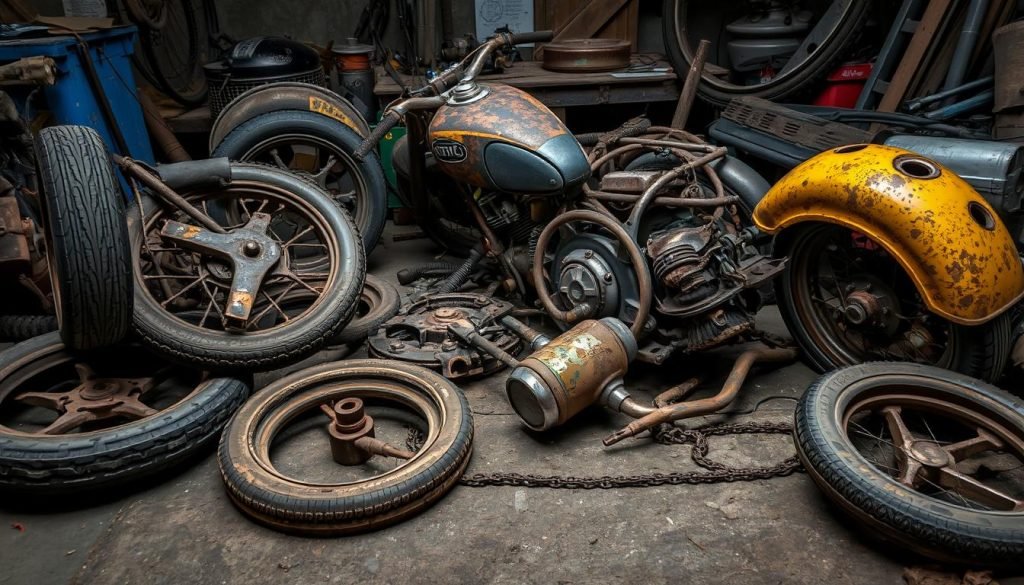
Remember, even damaged motorcycle parts can make money. About 100 out of 130 parts from a bike might sell, with prices from $5 to $250. Use tools like RedBook to figure out your bike’s value based on its make, model, and year.
When checking your bike, look for damage like scrapes, rust, and fork straightness. Also, check for any custom or aftermarket parts. These can affect the price. Knowing your bike’s condition helps you decide which parts to sell and for how much.
To get the best price for your parts, research what people are willing to pay. Look at eBay, Gumtree, and Facebook Marketplace. This will give you an idea of what your parts are worth. By doing your homework, you can sell your motorcycle parts for a good price.
Steps to Prepare Your Motorcycle for Sale
When selling your motorcycle for parts, it’s key to prepare it well. You want to show it in the best light to attract buyers. Motorcycle dismantlers help by disassembling and preparing your bike for sale.
To begin, disassemble key parts carefully. This means removing fairings, wheels, and more. These can be sold separately or together. Cleaning and storing these parts right is vital to keep their value.
Disassembling Important Parts
Disassembling your motorcycle needs careful planning. You must identify and protect the most valuable parts. This includes the engine, transmission, and suspension. Use the right tools and techniques to avoid damage.
Cleaning and Storing Parts Properly
After disassembling, clean and store parts well. Use cleaning solutions and protective coatings to prevent rust. Store them in a dry, secure place like a garage or storage unit.
By following these steps, you can get your motorcycle ready for sale. Whether selling for parts or looking for the best place, preparation is crucial.
| Part | Condition | Price |
|---|---|---|
| Engine | Good | $1,000 |
| Transmission | Excellent | $800 |
| Suspension | Fair | $500 |
Finding the Right Market for Parts
When selling motorcycle parts, you have many options. The best place to sell depends on the parts’ type and condition, your target audience, and your preferences. You can sell online, through local shops, or to wreckers.
Online marketplaces offer wide reach and convenience. They let you list parts and connect with buyers nationwide. But, watch out for scams and deal with trusted buyers. Local shops provide personal service and can help find the right buyer. Wreckers, like Melbourne Motorcycle Wreckers, make selling easy and pay cash for any bike.
- Reach and audience
- Convenience and ease of use
- Pricing and competition
- Speed of sale and payment
By thinking about these points, you can find the best place to sell your parts and get a good price.
The secret to selling well is knowing your audience. Choose a market that meets their needs. With the right strategy, you can sell your parts fast and get the cash to upgrade or fix your bike.
Legal Considerations When Selling Parts
Thinking about Is Selling Your Motorcycle for Parts a Good Option?? It’s key to know the legal side. In Australia, the Australian Consumer Law (ACL) covers the sale of motorcycle parts. This law protects consumers. As a seller, you must follow the ACL, which means giving clear ownership papers and handling titles right when selling motorcycle for parts.
You’ll need to give the buyer important documents like the vehicle’s title and a bill of sale. Motorcycle dismantlers must also follow local rules and safety standards. It’s important to check the laws in your area, as they can differ.
Some important things to remember include:
- Getting a roadworthy certificate (RWC) if needed
- Telling the buyer about any known problems with the motorcycle
- Following environmental and safety laws
By knowing and following these legal points, you can make selling motorcycle for parts easy and stress-free. Keep up with changes in the ACL and local laws to avoid problems.
| Document | Description |
|---|---|
| Vehicle’s Title | Proof of ownership |
| Bill of Sale | Record of the sale transaction |
| RWC (if required) | Certificate of roadworthiness |
Pricing Your Motorcycle Parts
Setting the right price for motorcycle parts is key. You must think about demand, condition, and market prices. It’s important to research to stay competitive and attract buyers. For example, parts like engines and exhaust systems often fetch higher prices.
Looking at the market, motorcycle parts for sale have a wide price range. A radiator guard for a Yamaha YZ250F might cost $369.95. On the other hand, a KTM Bash Plate Pipe Guard could be around $460.00. This shows that even used parts can hold value.
To price your motorcycle parts for sale well, follow these tips:
- Check online and local shops to see what similar parts are selling for.
- Think about the part’s condition, age, and rarity when setting prices.
- Be competitive but also make sure you’re making a profit. Use guides or ask experts for fair market value.
Also, when selling motorcycle for parts, be upfront about the condition. This builds trust and can lead to a sale. By pricing right and being honest, you’ll attract more buyers and get a better price.
| Part | Price | Condition |
|---|---|---|
| Radiator Guard | $369.95 | New |
| KTM Bash Plate Pipe Guard | $460.00 | Used |
| One-Piece Rear Disc Guard | $249.95 | New |
Effective Marketing Techniques for Part Sales
To sell motorcycle parts, you need a good marketing plan. This means making listings that grab attention and using social media to reach more people. The best place to sell parts is online, where you can show your products to many.
For effective listings, use clear photos and detailed descriptions. This helps buyers know what they’re getting and avoids problems. Also, point out the part’s main features and benefits, like its fit for certain bikes or its condition.
Crafting Compelling Listings
- Use high-quality photos that show the part from multiple angles
- Include detailed descriptions of the part, including its condition and any flaws
- Highlight the key features and benefits of the part
When selling damaged parts, be honest about their condition and show photos of any damage. This builds trust and lowers the chance of returns or issues. Use social media to find more buyers looking for specific parts.
Utilizing Social Media Platforms
Social media is great for marketing your motorcycle parts business. Use sites like Facebook and Instagram to connect with buyers and show off your products. Join motorcycle groups and forums to reach more people and show you’re a trusted seller.
Dealing with Buyers
When selling motorcycle parts, it’s key to talk to potential buyers well. This ensures safe and successful deals. You should check if the buyer is trustworthy by asking questions and verifying their details. Online groups or forums for motorcycle fans can also help you find buyers.
When you’re talking prices and terms, be open about the parts’ condition and quality. Give detailed descriptions and photos. This builds trust and boosts your sale chances. You might also want to offer warranties or return policies for extra peace of mind.
Understanding Buyer Types
There are different buyers when selling motorcycle parts. Some are individual buyers looking for specific parts. Others are motorcycle wreckers buying in bulk to resell or repair. Knowing what each type wants helps you sell better.
For example, wreckers might pay more for bulk. But individual buyers care more about part quality. So, make sure to show off your parts well.
Securing Sales with Deposits
To make a sale, ask for a deposit. This is part of a sale agreement that outlines the deal. It includes the price, how to pay, and any guarantees or returns. A deposit shows the buyer is serious and lowers the risk of them changing their mind.
When selling parts, think about who you’re selling to. Know what each type wants and be ready to negotiate. This way, you can get a good price for your parts. Whether you’re just starting or already selling, being informed is crucial for a smooth transaction.
| Buyer Type | Needs and Motivations | Sales Approach |
|---|---|---|
| Individual Buyers | Specific parts for repair or upgrade | Provide detailed descriptions and photos, offer warranties or return policies |
| Motorcycle Wreckers | Bulk purchases for resale or repair | Negotiate bulk prices, provide information on part condition and quality |
Frequently Asked Questions about Selling Parts
Thinking about selling motorcycle for parts? You might have some doubts. A common myth is that only perfect parts sell, but this isn’t true. Many motorcycle dismantlers buy parts in different states and even whole bikes for breaking down.
The process of selling parts can seem tricky. But, with the right help, it’s easier than you think. Knowing your duties as a seller is key, including legal and ethical stuff. Questions about warranties, returns, and who’s liable can be sorted out with trusted motorcycle dismantlers.
Some common questions about Is Selling Your Motorcycle for Parts a Good Option? are:
- What parts are in demand?
- How do I figure out my parts’ value?
- What are the perks of teaming up with motorcycle dismantlers?
Understanding the process and benefits of selling motorcycle for parts helps you decide. It’s important to think about the good and bad sides and your own situation before choosing.
Alternatives to Selling for Parts
If your motorcycle is too damaged to fix or you no longer need it, there are other ways to handle it. You might sell the whole bike, even if it’s not in top shape. This could interest people who love fixing up old bikes.
Another option is to donate your motorcycle to charity. This helps others and might even save you money on taxes.
Selling the Complete Motorcycle
Selling your motorcycle as one piece can be a good choice. It works well if the bike is mostly okay or holds special memories. It might attract collectors or people who enjoy fixing up old bikes.
Make sure to find out what your bike is worth. Also, fix any looks or mechanical problems before selling.
Donating or Recycling Options
If your motorcycle can’t be driven anymore, think about donating or recycling it. Charities and local groups might take it. This helps others and could save you on taxes.
For bikes that can’t be fixed or donated, look for recycling places. They can break down your bike safely and eco-friendly.