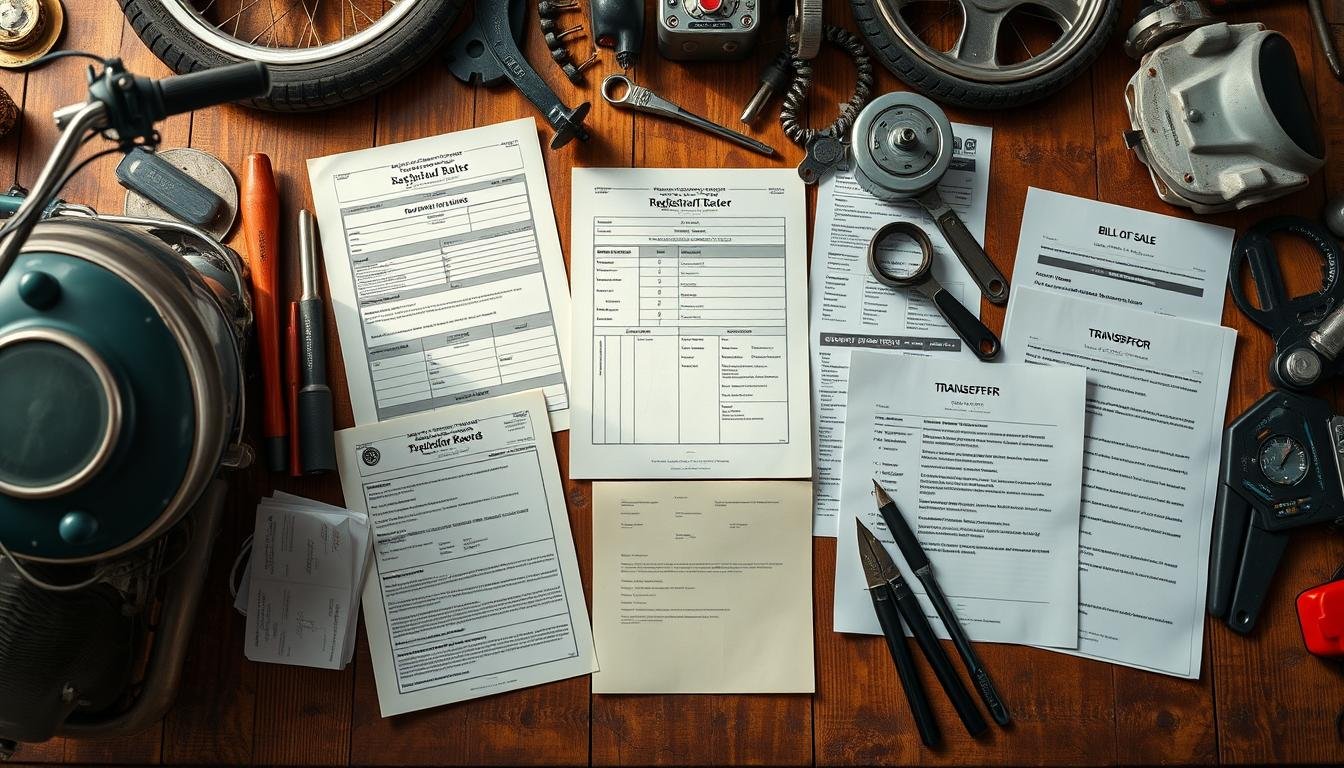
When you decide to sell your old motorcycle, knowing the key documents is vital. You need to make sure all the necessary paperwork is ready. This includes proof of ownership, the registration certificate, and notices of disposal.
These documents protect you as the seller and give the buyer peace of mind. They help avoid any legal issues and make the sale more trustworthy. Having the right documents can prevent problems and make the buyer more confident in their purchase.
Key Takeaways
- Essential documents include proof of ownership and registration details.
- Proper paperwork ensures legal compliance and smooth ownership transfer.
- Notices of disposal are necessary for managing seller responsibilities.
- Clear documentation builds buyer confidence and mitigates disputes.
- Understanding legal requirements protects both parties in the transaction.
Understanding Ownership of Your Motorcycle
When you plan to sell your motorcycle, knowing who owns it is key. There are documents needed to sell old bike that prove you own it and that it’s legal. Knowing what these documents are can make selling your bike easier.
Proof of Ownership Documents
The proof of ownership motorcycle can be different things. First, you need the original receipt from when you bought it. This shows you’re the real owner. You might also need old registration papers and any papers from when someone else owned it.
Having all these documents ready can speed up the sale. It can also avoid any arguments later on.
Importance of the Registration Certificate
The registration certificate is very important. It shows your motorcycle is legal to drive on roads. This document keeps you safe from legal problems and is needed when you sell your bike.
If you don’t have it, you could face legal issues. This could make you responsible for problems after the sale.
| Document Type | Description | Importance |
|---|---|---|
| Original Purchase Receipt | Proves initial sale and ownership | Essential for legal ownership |
| Previous Registration Certificates | Shows the motorcycle’s registration history | Helps establish clear ownership |
| Transfer Paperwork | Records any ownership changes | Key for verifying ownership chain |
| Registration Certificate | Validates motorcycle’s legal status | Critical for sale and transfer |
Motorcycle Registration and Licensing Requirements
When selling used motorcycles in Australia, knowing about registration and licensing is key. Make sure your motorcycle is legally registered to avoid issues. You can check the registration status online or through local authorities.
This ensures the motorcycle hasn’t been stolen and meets all requirements. It’s a crucial step in the selling process.
Checking Registration Status
To check if your motorcycle is registered, visit your state’s transport authority website. You can also use a dedicated service. Have the Vehicle Identification Number (VIN) ready for accurate results.
Keeping accurate records is important. It shows you follow the rules and laws about owning a motorcycle.
Understanding Stamp Duty and Fees
Remember, there’s a fee for transferring motorcycle ownership called stamp duty. The cost varies by state or territory. It’s important to include these costs in your financial plans.
Below is a table showing the stamp duty rates for different states in Australia:
| State | Stamp Duty Rate |
|---|---|
| New South Wales | 3% of the purchase price |
| Victoria | 3% of the purchase price |
| Queensland | $3.00 per $100 of the purchase price |
| Western Australia | $23 for the first $1000, $6 for each additional $100 |
Knowing about these fees helps the selling process go smoothly. It also helps you understand the financial side of selling your motorcycle.
RWC (Roadworthy Certificate) Explained
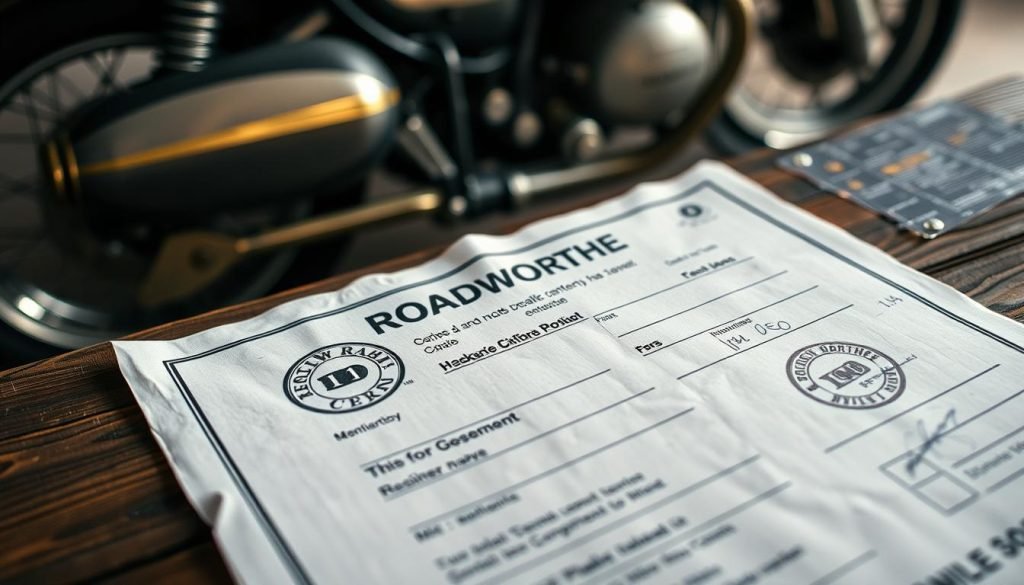
A Roadworthy Certificate (RWC) is key when selling motorcycles in Australia. It shows your motorcycle is safe and works well. Buyers need this to know the bike is roadworthy. Knowing how to get a RWC and its validity period is vital for selling.
How to Obtain a RWC
To get a roadworthy certificate for your motorcycle, visit an authorised station. A certified inspector will check your bike against safety and operational standards. In Queensland, it costs $56.35. If your bike passes, you’ll get a certificate valid for a certain time.
Validity Period of the RWC
The RWC’s validity period is important for sellers and buyers. In Queensland, it’s good for two months or 2,000 kilometers, whichever happens first. In Victoria, it’s only valid for 30 days for private sales. This shows buyers need to act fast when looking to buy.
| State | RWC Validity Period |
|---|---|
| Queensland | 2 months or 2,000 km |
| Victoria | 30 days for private vehicles, 7 days for commercial vehicles |
Preparing Your Motorcycle for Sale
Before selling your motorcycle, it’s important to prepare it well. This means cleaning it thoroughly and showing off its maintenance records. A clean bike and good records can make buyers trust and value it more.
Cleaning and Maintenance Records
Cleaning your motorcycle well is key to making a good first impression. A clean bike looks great and helps buyers spot any problems. Also, showing maintenance records can prove your bike has been well looked after. This can help you get a better price.
Importance of a Comprehensive Inspection
Getting a detailed inspection before selling is crucial. It helps find any issues that might scare off buyers. By being open about your bike’s condition, you can build trust. This can make selling easier and faster.
| Preparation Step | Description |
|---|---|
| Cleaning | Thoroughly wash and polish the motorcycle to enhance appearance and visibility of issues. |
| Gather Records | Collect all service receipts and maintenance records that demonstrate proper care. |
| Conduct Inspection | Perform a detailed inspection to uncover any mechanical issues, ensuring transparency during the sale. |
| Documentation | Prepare important documents, including ownership proof and registration, to facilitate the sale process. |
Transfer of Ownership Process in Australia
The process of transferring motorcycle ownership in Australia has several key steps. It’s important for both the seller and buyer to fill out the necessary paperwork quickly. This ensures the vehicle’s legal status and protects both parties from future problems.
Completing the Transfer Form
To start the transfer, you need to fill out a transfer form. You can find this on your state’s government website. The form asks for:
- Current owner’s details
- New owner’s details
- Motorcycle’s registration number
- Odometer readings
- Sale price
It’s important to fill out the form correctly. Any mistakes can cause delays. After you’ve filled it out, send it to the vehicle registration office within the given time.
Notifying the Relevant Authorities
You must tell the authorities about the sale within 14 days. Not doing so can lead to fines or legal trouble. This step is crucial for keeping records up to date and avoiding future problems.
Here are some key steps for notifying authorities:
- Submit the completed transfer form.
- Pay the transfer registration fee:
| Time Frame | Transfer Fee (NSW) |
|---|---|
| Within 14 days | $37 |
| After 14 days | $172 |
Notifying authorities and making payments on time shows you’re a responsible owner. It helps the transfer go smoothly and keeps records accurate in Australia.
Legal Considerations for Selling
It’s important to know the laws about selling motorcycles in Australia. Following the motor vehicle laws helps protect you and the buyer. The FCAI Motorcycle and Scooter Industry Code of Conduct, starting on 1 December 2018, sets out key rules for sellers.
This Code helps establish good practices for all members and their dealers. It encourages them to follow these guidelines.
Understanding Motor Vehicle Laws
Motor vehicle laws in Australia cover many aspects of buying and selling motorcycles. These laws deal with things like registration, safety, and warranties. Knowing these laws is key to avoid problems.
The guide on Australian Consumer Law (ACL) explains important consumer guarantees. These include the motorcycle being of acceptable quality and fit for purpose. Knowing these guarantees helps protect both you and the buyer.
Importance of Disclosure Obligations
Being open about the motorcycle’s condition is crucial. You must tell buyers about any defects, accidents, or changes that might affect the bike’s performance. Being honest builds trust and meets legal requirements.
It’s important to be clear about major and minor issues with the motorcycle. This clarity is key to a fair sale.
| Aspect | Detail |
|---|---|
| Effective Date of FCAI Code | 1 December 2018 |
| Key Dealers in Australia | BMW Group Australia, Harley-Davidson, Honda MPE, Kawasaki, KTM, Peter Stevens Importers, Suzuki Australia Pty Ltd, Yamaha |
| Parts of the Code | Introduction, User Guide, Overarching Principles, Definitions |
| Recommended Audience | All Members and non-FCAI importers |
| Applicable Vehicle Purchases | Excludes vehicles purchased before 1 January 2011 and those bought for resale |

Advertising Your Motorcycle for Sale
Choosing the right platform to sell your motorcycle is key to getting noticed. There are many places to sell a motorbike, each attracting different buyers. Pick the best one to reach more potential buyers.
Best Platforms for Advertising
Here are some top choices for selling your motorcycle:
- Gumtree: Great for local sales, Gumtree lets you list for free. It connects you with buyers nearby.
- eBay: This site reaches more people. You can set a starting price and attract bidders. The Bike Shed Times also offers auctions for $125 plus a 5% commission if sold.
- Facebook Marketplace: Easy to use, it lets you talk directly with buyers. But, watch out for scams and be careful.
Crafting an Effective Listing
Creating a good listing is vital to attract serious buyers. Remember these tips:
- High-Quality Photographs: Show up to ten clear images of the motorcycle from different angles.
- Detailed Description: Share details about the motorcycle’s condition, mileage, and any changes or maintenance.
- Realistic Pricing: Check the market price and consider the bike’s condition. Kelley Blue Book and the NADA Motorcycle Guide can help.
- Clear Contact Details: Make it simple for buyers to contact you with questions or to arrange a viewing.
Negotiating the Sale
Negotiating a motorcycle sale can really impact the final price and the whole experience. Knowing the market and using smart negotiation tips is key. A careful approach helps you talk in a way that works for both sides, aiming for a good deal for everyone.
Tips for Successful Negotiation
- Research Market Values: Learn about current prices. Knowing what similar bikes cost helps you negotiate better.
- Communicate Respectfully: Be polite during talks. A friendly tone makes everyone more open to discussing prices.
- Be Prepared to Walk Away: If offers are too low, be ready to leave. This shows you value your bike.
- Highlight Unique Features: Talk about special features or upgrades that might make your bike worth more.
Setting a Fair Price
Finding a fair price for your bike is important to attract buyers. Look at similar listings to set a price range. Consider the bike’s condition, mileage, and any custom work.
| Component | Estimated Value (AUD) |
|---|---|
| Engine Components (Good Condition) | $300 – $500 |
| Frame & Bodywork Parts | $100 – $300 |
| Electrical Systems (Fair Condition) | $50 – $150 |
| Aftermarket Accessories | $100 – $400 |
By selling parts separately if your bike can’t ride, you might get more money. Knowing what parts are in demand helps. A smart plan not only helps in negotiations but also ensures a fair price for your bike.
Finalising the Sale
Finalising the sale of your motorcycle is key to protect both sides and meet legal needs. It’s important to pick safe payment options to avoid fraud. Cash, bank transfers, and escrow services are good choices for a secure deal.
Payment Methods to Consider
Choosing the right payment options is crucial when selling your motorcycle. Here are some top picks:
- Cash: It’s immediate and secure, but watch out for fake money.
- Bank Transfer: It’s safe and can be tracked, but make sure the money clears before giving over the bike.
- Escrow Services: This adds extra security, keeping the money safe until both sides are happy.
Always get a receipt if the sale is over $75. It proves the deal for both the buyer and seller.
Completing the Paperwork
It’s essential to finish the paperwork to transfer ownership. You’ll need to prepare a few important documents:
- Transfer of Ownership Form
- Receipt for payment
- Registration Certificate
- Roadworthy Certificate (if needed)
- Owner’s manual and supplements
- Scheduled service logbook
- Receipts for any parts and services
Keep copies of the paperwork for a smooth handover. Also, get the new owner’s details for the Notice of Disposal. This must be sent to your local registration office within 14 days.
Post-Sale Responsibilities
After selling your motorcycle, it’s key to handle your post-sale duties. This means protecting yourself from unexpected costs and making sure all paperwork is in order. Doing these tasks right helps keep things clear and protects your money.
Canceling Your Insurance
One important thing to do is cancel your motorcycle insurance. Not cancelling could lead to paying for insurance you don’t need and facing unexpected costs. By quickly contacting your insurance company, you avoid these issues and make sure you’re not responsible for the bike anymore.
Keeping Records of the Sale
It’s also vital to keep records of the sale. Keep copies of receipts, agreements, and any other important papers. This info is crucial if any problems come up later. In places like New South Wales, keeping these records is a must for workers in the industry, showing how important it is for your safety.