Knowing how seasonal trends affect motorcycle prices is key for buyers and sellers in Australia. The market changes a lot throughout the year, which changes motorcycle prices. Selling during the busiest times can get you better prices, while slow times might lower them.
This article explores the best times to sell, what affects prices, and how to use seasonal trends to your advantage.
Key Takeaways
- Peak demand seasons often yield higher selling prices.
- Off-peak periods can bring reductions in motorcycle values.
- A thorough understanding of seasonal fluctuations benefits both buyers and sellers.
- Strategic timing can maximise financial outcomes in the motorcycle market.
- Weather and economic conditions also play significant roles in motorcycle pricing.
Understanding Seasonal Trends in Motorcycle Sales
Seasonal trends play a big role in motorcycle sales. They change how people buy and what they pay throughout the year. Knowing these trends helps you make the most of the motorcycle market in Australia.
In Australia, the motorcycle market goes up and down with the seasons. Weather, the economy, and how people view motorcycling all play a part.
Defining Seasonal Trends
Seasonal trends in motorcycle sales show when demand goes up or down. This leads to changes in what people pay for bikes. For example, spring and summer are when most people buy bikes.
Spring gets everyone excited, making sales go up. But when it gets cooler, people want to buy less, and prices drop.
The Australian Motorcycle Market
The Australian motorcycle market is special because of its weather and economy. In places like Queensland and Western Australia, people buy bikes all year. But in cooler places like Tasmania, sales drop a lot in winter.
Recent data shows prices go up when it’s warmer and down when it’s colder. This shows why knowing these trends is important for both buyers and sellers.
| Season | Demand Level | Price Trends |
|---|---|---|
| Spring | High | Increasing |
| Summer | Strong | Stable |
| Fall | Declining | Adjusting |
| Winter | Low | Decreasing |
Peak Selling Seasons for Motorcycles
Knowing when demand for motorcycles is high can help your selling plan. Some seasons see higher values, making them the best for selling. We’ve looked at market trends to find key times for better sales.
Summer: The Prime Riding Season
Summer is the best time for riding motorcycles. The weather is great, and riders want to be out. This means more people looking to buy, which can lead to higher prices.
The months of December to February are perfect for riding. This makes it a good time to sell and get a better price. As summer gets closer, think about how it can help your sale.
Key Holidays and Events
Big holidays and events also boost interest in motorcycles. For example, Australia Day draws in more enthusiasts. This is a great chance to sell your bike.
Other events can also affect how people buy. By timing your sale with these events, you can get the most out of selling your motorcycle.
Off-Peak Seasons and Their Influence
Knowing when to buy or sell a motorcycle is key. Winter is a slow time for sales, affecting both buyers and sellers.
Winter: The Slowdown
Cold weather and bad riding conditions hurt sales in winter. People prefer staying warm rather than buying bikes. This means fewer people looking to buy.
Factors Affecting Winter Sales
Several things make selling a bike in winter tough:
- Cold weather stops people from test riding and buying.
- Prices can drop by 5% to 25% during this time.
- There are fewer buyers, making it harder to get a good price.
- Higher insurance costs in off-peak seasons scare off buyers.
Winter is the worst time to sell a motorcycle. Knowing this can help you make better choices.
| Season | Sales Activity | Price Fluctuation |
|---|---|---|
| Winter | Low | -5% to -25% |
| Spring | Increasing | Stable |
| Summer | Peak | High |
| Fall | Declining | Normal |
The Role of Weather in Motorcycle Sales
Weather plays a big role in motorcycle sales. The changing seasons affect how much people want to buy bikes. Good weather makes people more excited to ride, boosting demand.
How Rain and Cold Impact Buying Decisions
Bad weather like rain and cold stops people from buying bikes. In winter, fewer people want to buy, leading to lower prices. But when the weather gets better, like in spring, bike sales go up.
The Importance of Riding Conditions
Good riding conditions make people want to buy bikes more. In spring and summer, bike sales jump up. Also, tax season is a good time to buy, as people have extra money to spend.
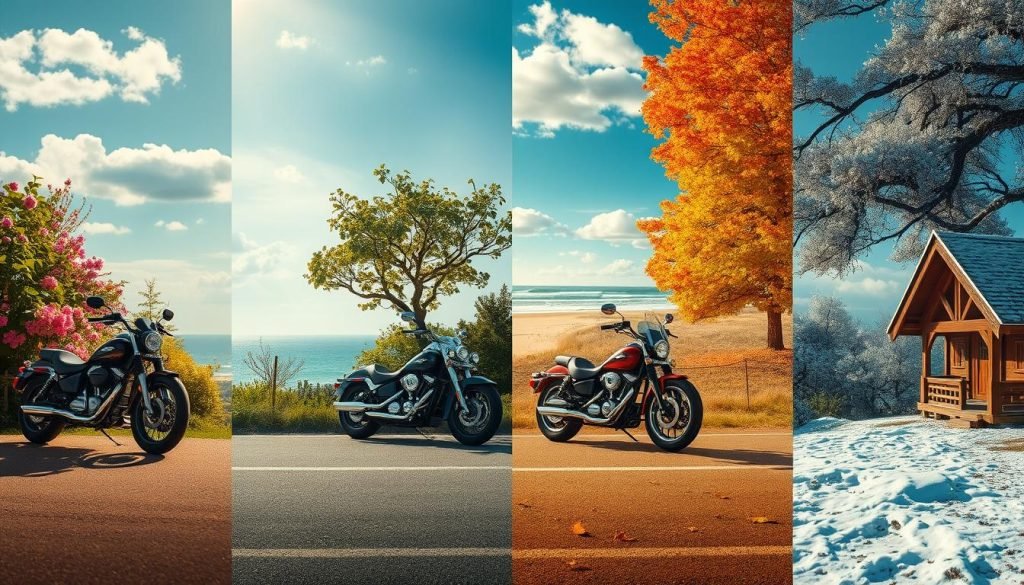
Knowing how weather affects bike sales helps sellers price bikes right. This way, they can sell more bikes and make more money. By timing their sales with the weather, sellers can make the most of the market.
Economic Factors Influencing Motorcycle Prices
It’s important to know the economic landscape when looking at motorcycle prices. Many economic factors mix with seasonal trends, changing demand and prices. This knowledge helps when buying or selling a motorcycle.
The Relationship Between Seasonality and Economy
Seasonal motorcycle prices mirror the economy’s health. When the economy grows, people have more money to spend on bikes, boosting demand in peak seasons. Good economic times mean more riders want to buy motorbikes as the weather gets warmer.
But, when the economy slows down, people spend less, leading to fewer motorcycle sales. This shows how vital it is to watch both seasonal and economic signs to guess motorcycle price changes.
Currency Fluctuations and Their Effects
Currency changes greatly affect motorcycle prices, mainly because of import costs. A weaker Australian dollar makes imported bikes pricier. This higher cost often means higher prices for local buyers.
Different bikes and models react differently to these price changes, depending on how much they rely on imports. Knowing these economic impacts helps predict price shifts and plan your motorcycle buying or selling strategy.
Regional Differences in Seasonal Trends
Australia’s varied climates and cultures lead to different motorcycle sales trends in each state. Knowing these regional differences helps both buyers and sellers. Warmer areas tend to have steady sales all year, while cooler spots see more ups and downs.
Variations Across Australian States
Queensland’s warm weather means people ride bikes all year, keeping sales steady. But in Tasmania, sales drop in winter as riders stay off the roads. This shows how important it is to tailor marketing to each region’s needs.
Urban Versus Rural Sales Trends
City dwellers often prefer motorcycles for their convenience and culture. Retailers in urban areas can boost sales with targeted ads in spring and summer. Rural areas, on the other hand, have their own unique buying patterns. Sales strategies need to reflect these differences to be effective.
| Region | Peak Sales Season | Sales Performance (Annual Growth) | Market Characteristics |
|---|---|---|---|
| Queensland | Spring/Summer | Stable Growth | High demand year-round |
| Tasmania | Spring | Seasonal Decline | Cold winters impact sales |
| New South Wales | All Year | 2-3% Growth | Strong urban market |
| Victoria | Spring/Summer | 1-2% Growth | Active motorcycling culture |
| Western Australia | Summer | 3-5% Growth | Seasonal preferences |
Motorcycle Type and Seasonal Demand
The motorcycle market has clear trends based on bike type and season. Knowing these motorcycle type demand trends helps you make better buying and selling choices all year. Seasonal analysis shows how different bikes are more popular at different times.
Sportbikes vs. Cruisers
Sportbikes are most in demand in summer. Their speed and agility make them perfect for warm weather. On the other hand, cruisers become more popular in autumn and winter. They’re chosen for their comfort and ability to go on long rides in cooler weather.
Electric Motorcycles and Eco-Conscious Buyers
More people want eco-friendly transport, changing how bikes are sold. Electric motorcycles are getting more attention, thanks to green buyers. Sales jump during Black Friday, but drop in cold months. Yet, online deals keep prices low all year, giving you chances to buy during slow times.
| Motorcycle Type | Peak Demand Seasons | Key Features |
|---|---|---|
| Sportbikes | Summer | Performance, agility, style |
| Cruisers | Autumn, Winter | Comfort, touring capability, classic design |
| Electric Motorcycles | Winter (promotions), Spring (new models) | Eco-friendly, lower operating costs |
Understanding these trends helps you navigate the motorcycle market better. It leads to smarter buying and selling, improving your experience in this changing world.
Marketing Strategies for Different Seasons
Knowing the seasonal trends can really boost your motorcycle marketing. In busy seasons, focus on promotions to draw in buyers. Use messages that show off the fun of riding to keep customers interested. Changing your marketing with the seasons makes sure it hits the mark with people.
Seasonal Promotions and Discounts
Seasonal deals can really lift your sales. For example, Christmas is a big time for sales, with some industries seeing a 30% spike. In the motorcycle world, offering great deals during these times can attract lots of buyers. It’s a smart way to make the most of the busy periods.
Tailoring Your Marketing Message
It’s key to tailor your marketing to speak directly to your audience. In summer, talk about road trips and outdoor fun. Winter is the time for off-road thrills. This approach not only grabs attention but also fits well with what people want to hear.
| Season | Promotional Focus | Potential Discounts | Target Audience |
|---|---|---|---|
| Summer | Adventure and Road Trips | 10-15% | Leisure Riders |
| Winter | Winter Riding Gear | 15-20% | Adventure Enthusiasts |
| Spring | New Model Releases | 5-10% | Enthusiasts |
| Autumn | Maintenance and Upgrades | 10% | Current Owners |
Using these custom marketing plans can make your motorcycle brand shine all year. By matching your promotions to the season, you boost engagement and sales.
Timing Your Purchase or Sale
Knowing the best time to buy or sell motorcycles can make a big difference. By understanding seasonal changes, you can plan your sale or purchase to get the most value. The best time to sell motorcycles changes throughout the year, based on how often riders use them and how many are available.
Best Times to Buy
Fall and winter are the best times to buy motorcycles. During these months, fewer people are buying, so shops offer big discounts to sell what they have. The holiday season, including Black Friday and Cyber Monday, also brings great deals on popular models, like electric mopeds.
December is usually the best month to buy, with shops eager to clear out old stock. This means you can find great deals on the latest models.
When to Sell for Maximum Profit
When selling your motorcycle, timing is everything to get the best price. The best time to sell motorcycles is right before the busy seasons, like spring. This is when more people are looking to buy, which means higher prices.
Getting your motorcycle ready to sell before new models come out in spring can also help. This way, you can get a better price since older models’ prices drop. Keeping your motorcycle in good condition and having all maintenance records ready can also help you get a higher price.
The Impact of New Models on Pricing
New motorcycle models greatly affect prices in the market. Big names like Harley-Davidson and Honda have set release times. Knowing when these models come out is key for buyers and sellers to stay ahead.
Release Cycles of Major Brands
Motorcycle makers usually launch new models in early spring. This timing matches the start of the riding season, exciting fans. When new bikes arrive, last year’s models quickly lose value.
For example, if Harley-Davidson introduces new cruisers in March, expect prices of older models to fall. Dealers want to make room for the new arrivals.
How New Features Influence Buyer Preferences
New features in recent models change what buyers want. Better tech, safety, and fuel efficiency make older bikes less desirable. This shift can make older models cheaper, during holidays or sales.
The best time to buy might be in fall and winter. Demand is lower, and dealers clear out old stock for the new models.
Seasonal Maintenance Considerations
Seasonal maintenance is key for your motorcycle’s safety and value. Doing the right maintenance before winter and summer can boost its performance and value. Knowing how seasons affect motorcycle values helps you make smart maintenance choices.
Preparing Your Motorcycle for Winter
When winter comes, protect your motorcycle from harsh weather. Here are important steps to take:
- Clean and Store: Clean your motorcycle well to remove dirt. Store it indoors to keep its value up to 20% higher.
- Fluid Checks: Make sure all fluids are full and use winter-friendly ones.
- Protective Coating: Use a coating to stop rust and damage from moisture and cold.
- Battery Maintenance: Disconnect the battery and charge it slowly to keep it alive during winter.
- Regular Inspections: Fix small problems like dents and electronics issues to increase value by up to 8%.
Essential Pre-Ride Checks in Summer
When summer starts, do a detailed check before riding. These checks are crucial for your safety and the bike’s condition and value:
- Tire Condition: Check tire pressure and tread to ensure safety on long rides.
- Brake Functionality: Make sure brakes work well for your safety and the bike’s performance.
- Fluids and Filters: Change engine oil, coolant, and air filters for better engine performance.
- Cleanliness: Keep your motorcycle clean for a better look; clean photos can get you up to 15% more when selling.
- Documentation: Keep detailed service records; they can help sell your motorcycle for about 12% more, attracting buyers.
Keeping up with seasonal maintenance can greatly improve your motorcycle’s resale value. By understanding how to maintain your motorcycle for the seasons, you can ensure it lasts longer and sells for a good price.
Conclusion: Adapting to Seasonal Trends
In the world of motorcycle sales, knowing and adapting to seasonal trends is key. By using dynamic pricing, you can make more money during busy times. When spring comes, more people want motorcycles, which means prices go up. Knowing this can really help your selling strategy.
Embracing Dynamic Pricing Strategies
To deal with seasonal motorcycle prices, use tools like Kelley Blue Book and NADA Guides. They help you set good prices based on your bike’s details. Also, make sure your bike looks good in photos and descriptions on sites like Craigslist and Facebook Marketplace. This can make your bike more attractive to buyers.
Long-term Considerations for Motorcycle Owners
For long-term success, keep learning about seasonal changes and the economy. Knowing how things like consumer confidence and interest rates affect buying can help you make smart choices. You might sell more in peak season or find better deals in milder times. Always be honest about your bike’s condition and connect well with buyers to get good deals.